
A proposal to divide the Highland Council into three separate authorities has been submitted to ministers, backed by fourteen community councils and opposed by the authority itself.
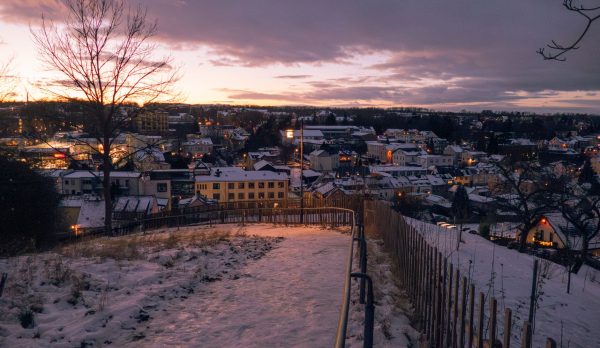
The council covers an area larger than Wales. It contains a city suburb, a commuter belt, a national park, several islands and communities of under fifty people that are six hours by road from its headquarters.
The case for division is not new. What is new is the argument being made for it.
Divergence
Proponents argue the authority now contains areas facing opposite problems, and that a single set of policies cannot serve both.
Parts of the east are managing rapid growth: housing shortages, school capacity, infrastructure under strain. Parts of the west and north are still losing working-age population and closing services. A council-wide policy on, for example, second homes, or school viability thresholds, or housing land release, has to be right for both, and cannot be.
“We are asked to set one policy for a place with a housing queue and a place with empty houses. Whichever way we vote, half the members are voting against their own communities.”
A councillor supporting the split
The council’s objection
The authority’s response is substantive rather than defensive.
Reorganisation costs money that would otherwise be spent on services; smaller authorities lose economies of scale in exactly the specialist functions rural areas struggle to staff, including planning and social work; and the growing east currently cross-subsidises the north and west, which three separate authorities would end.
That last point has been made carefully by everyone, because it is the one that would decide it.
The authority
- Area: larger than Wales
- Furthest community from headquarters: around 6 hours by road
- Wards with population growth over 30% since 2022: 3
- Wards still losing population: 9
- Community councils backing the split: 14
- Estimated one-off cost of reorganisation: £90m–£140m
Where it goes
Ministers are not obliged to act, and boundary changes of this scale have historically required a national review rather than a single proposal.
Officials have indicated the submission will be “considered as part of the wider work on local governance”, which is a phrase two of the community councils involved have pointed out was used in response to the same proposal in 2016.