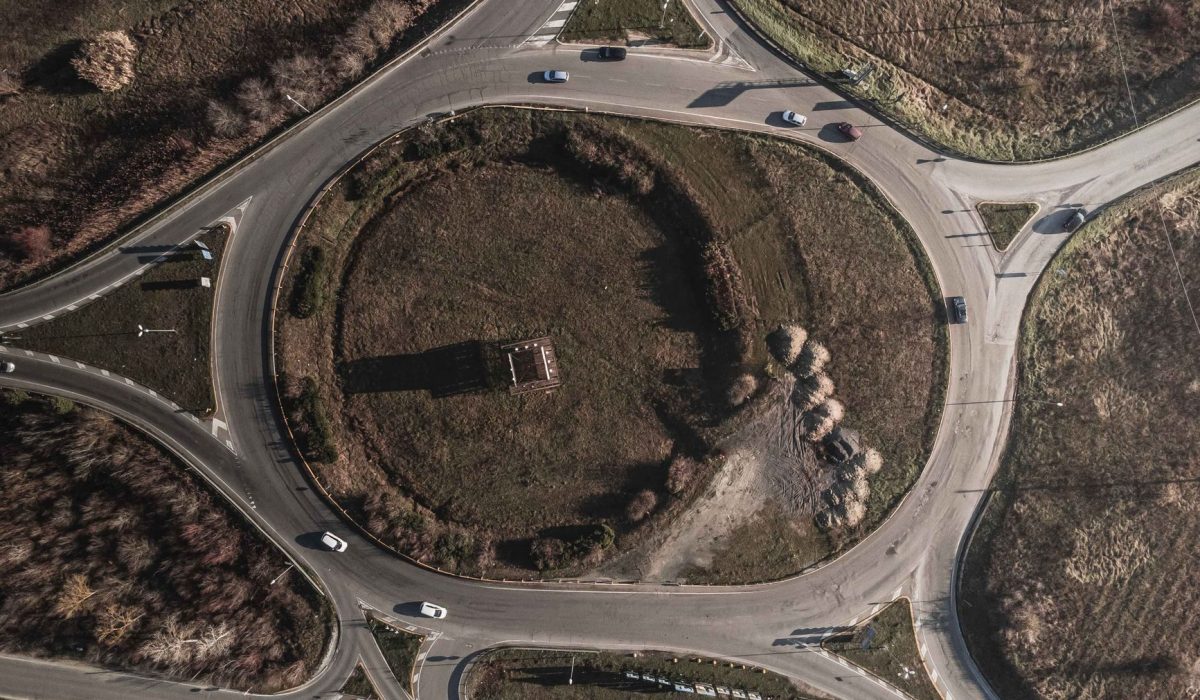
The replacement for the Sheriffhall roundabout will have a diameter of 4.2 kilometres and will be visible from low earth orbit, engineers have confirmed.
The existing junction has been a byword for delay for two decades, both in the sense that traffic is delayed at it and in the sense that any decision about it is. The new design resolves the first problem by making the roundabout large enough that vehicles do not meaningfully interact.
Inside the roundabout
The central island covers 1,384 hectares. It contains a working farm, two areas of woodland, a burn, and a stone circle that the design team have committed to leaving undisturbed.
The farm is accessible only by helicopter. The tenant has been offered a helicopter.
The island has been allocated its own postcode. Meteorologists have confirmed it will develop a local microclimate, with the modelling suggesting the interior will be around 1.5°C warmer than the carriageway and prone to its own fog.
“At this scale it stops being a junction and starts being a region. We have had to give it a drainage catchment, a biodiversity plan and a name.”
A member of the design team
By the numbers
- Diameter: 4.2km
- Circumference: 13.2km — longer than the Edinburgh bypass it connects to
- Time to complete one full circuit at 50mph: 9 minutes 50 seconds
- Lanes: 9 on the circulatory carriageway
- Signage: exits are announced 2.5km in advance, which is still inside the roundabout
The exit problem
Modelling has identified one substantial risk. At 13.2 kilometres, the circulatory carriageway is long enough that a driver who misses an exit faces a ten-minute return journey, and the model shows a meaningful proportion of drivers electing to reverse rather than go round again.
Reversing on the circulatory carriageway is prohibited under the current proposal. Officials have described enforcement as “an operational matter for a later stage”.
The scheme is scheduled for a decision in 2031, which those familiar with Sheriffhall regard as optimistic on the grounds that it is a date.