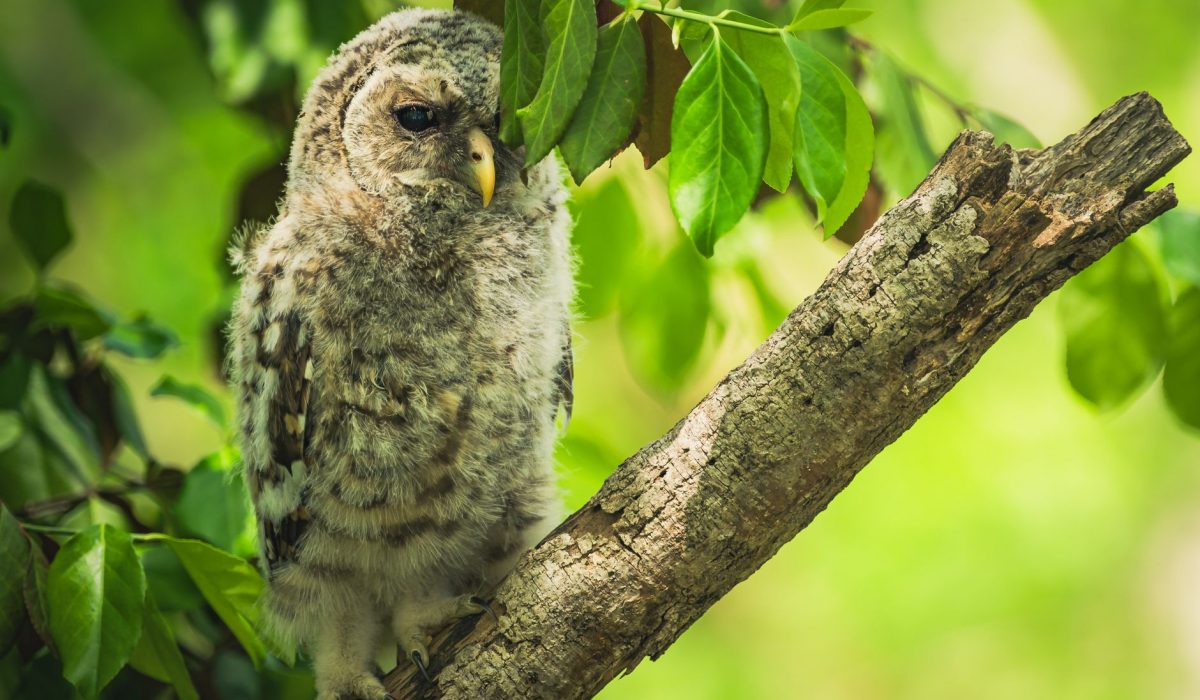
Tawny owls at three monitored sites are hunting substantially in daylight, according to two years of acoustic and camera data.
Nocturnal activity at the busiest of the three has fallen by around 60% since 2023. Daytime activity, which in this species is normally negligible and usually indicates illness or starvation, now accounts for a third of recorded hunting attempts.
The birds are in good condition. That is the part that surprised the team.
Why the nights stopped working
Tawny owls hunt largely by sound. They locate small mammals under vegetation from the noise they make, at volumes that a human ear standing beside the bird would not register.
The three sites now receive overnight visitors in numbers that did not exist five years ago: informal camping, vehicles arriving after dark, generators, music, and head torches sweeping the treeline. Sound level monitoring recorded a rise in overnight ambient noise of 14 decibels at the worst site during July and August.
An owl hunting by ear in that is, functionally, an owl hunting blindfolded.
“Nobody is doing anything wrong. It is a generator, a radio and a group of people enjoying themselves. It is also, to an owl, the entire hunting environment being switched off between ten at night and two in the morning.”
The lead researcher on the study
The daytime window
The glens are busy in the evening and quiet between roughly eleven in the morning and three in the afternoon, when most visitors are further up the hill.
That window is now the birds’ main hunting period at two of the three sites.
The findings
- Nocturnal activity at the busiest site: down around 60% since 2023
- Daytime hunting attempts: now about a third of the total
- Overnight ambient noise increase: up to 14dB in peak season
- Body condition: within normal range
- Breeding success: down at two of the three sites
Whether it is working
Partly, and only for now. Body condition is fine, which means the adults are feeding themselves adequately.
Breeding success is down at two sites, which suggests the daytime shift produces enough food for an owl but not enough for an owl and three chicks. Daylight hunting also exposes the birds to mobbing by crows, which is why they stopped doing it several million years ago.