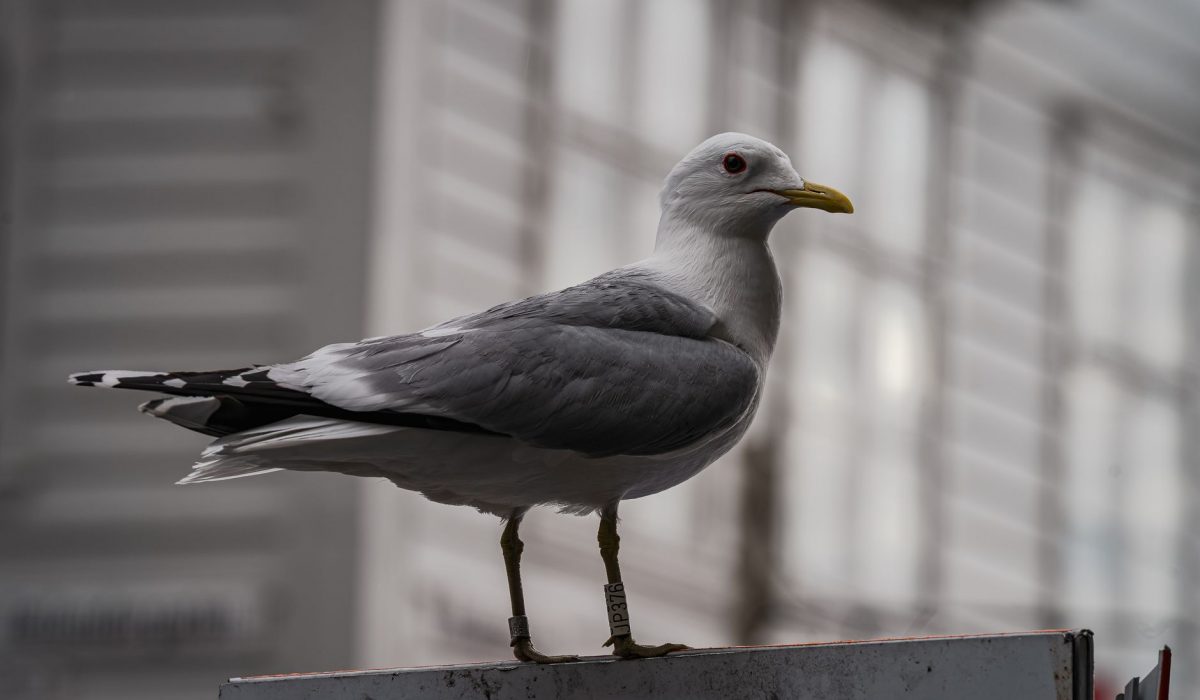
Herring gulls in Aberdeen have been recorded opening three separate designs of household and street bin, including a pedal bin operated by standing on the pedal, according to a study of urban gull behaviour published this month.
Researchers logged 1,100 hours of observation across the city centre, the harbour and two residential areas. Lid-opening was seen in 38 individually identifiable birds. More significantly, juveniles were repeatedly observed watching an adult do it and then attempting it themselves within the same session, which points to social learning rather than each bird working it out alone.
“They are not stealing your chips. They are exploiting a resource that we leave outside in a container with a hinge on it. The hinge was always going to be the weak point.”
Dr Emma Emmerich, who led the study
The awkward part
Urban gulls are experienced overwhelmingly as a nuisance: the noise from three in the morning in June, the mess, the dive-bombing near nests, the bin bags opened at first light and distributed down the street.
They are also, nationally, in trouble. The herring gull is red-listed in the UK, its natural coastal breeding populations having fallen sharply over decades as fisheries changed. The city birds thriving on Union Street are, in a sense, the survivors of a collapse happening out of sight along the coast.
That combination makes policy difficult. The birds are protected. Removing nests or eggs requires a licence, and licences have become harder to obtain, to considerable local frustration.
What actually reduces gull problems
- Gull-proof sacks for bagged waste — cheap and effective, and the study rated them the single biggest factor
- Bins with a latch, not just a lid
- Not feeding them, including by leaving food out for other birds
- Timing — putting bags out on the morning of collection rather than the night before
- Deterrent spikes and wires on roof ridges, fitted outside the breeding season
Looking at them works
One earlier finding held up in this study. Gulls approaching food are markedly less likely to take it if a person is looking directly at them. The birds monitor human gaze and adjust. Staring at your lunch attacker is, unglamorously, an evidence-based intervention.
The research team is now recruiting volunteers in three more coastal towns to record whether the lid-opening behaviour is spreading along the coast or has developed independently in each place. They would like photographs, ideally of the bin as well as the bird.