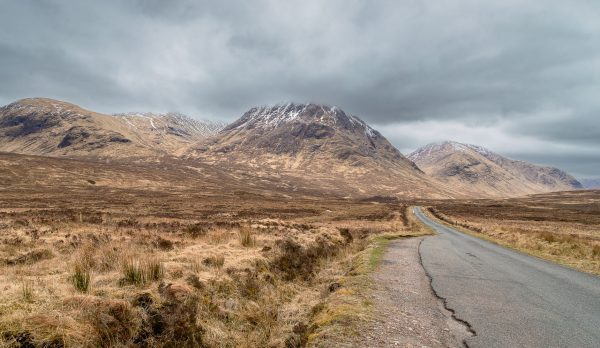

Over the past fortnight this section has reported on fourteen lanes to Inverness, an elevated motorway around a World Heritage Site, twelve lanes for ninety people, a roundabout with its own weather, and 1,100 passing places that will shortly not be passing places.
It is worth stating plainly what connects them, because it is not ambition. It is a single mistake, made repeatedly, for which the evidence has been settled since the 1960s.
Induced demand
Road capacity is not a fixed quantity of demand being poorly served. Capacity generates demand. Build a wider road and journeys that were not previously worth making become worth making, journeys that used another mode switch to driving, and development follows the road. Within a few years the new road carries more traffic at the same congestion as the old one.
This is not a fringe position. It has been measured on motorway widenings across Britain, the United States and Europe for six decades, and the result is consistent enough that transport economists treat it as a planning input rather than a debate.
“You cannot build your way out of congestion. We have known this since before I was born. We keep doing it because a road is a thing a minister can stand in front of.”
A transport economist at a Scottish university
What the actual problem is
The north’s difficulty was never lane capacity. It is concentration. An enormous share of the annual visitor traffic arrives within about three weeks in July and August, on a small number of routes, at roughly the same times of day.
Everything about that is addressable, and none of the addresses are fourteen lanes.
Things that would work, roughly in order of cost
- Spreading the season — pricing and marketing shoulder months, which is standard practice everywhere else in Europe
- Rail — the Highland Main Line exists, is single track in long stretches, and could take a serious share of both freight and visitors with passing loops that cost a fraction of one interchange
- Buses — a village with a Tuesday-only service does not have a transport network, it has a gesture
- Targeted junction and overtaking work — the specific fixes that address the specific casualty pattern
- Facilities — toilets, waste points, overnight aires; most of the damage attributed to visitor numbers is really a facilities shortfall
The awkward arithmetic
The Highland Superhighway is costed at £340bn. Passing loops on the Highland Main Line, a proper coordinated bus network across Sutherland and Caithness, and a full programme of toilets and waste facilities along the north coast would together come to a fraction of one percent of that, and would be delivered within the current decade rather than the next one.
They would also be almost impossible to photograph, which is not a trivial objection in a system where funding follows announcements.
One last thing
At the end of every conversation for this piece, the same observation appeared, phrased slightly differently each time.
The A96 is still single carriageway. The A9 dualling is two sections out of eleven. The Corran ferry is old. Half the country’s public toilets are shut.
Before anyone widens a strath or relocates the Tay, there is a considerable amount of ordinary, boring, entirely deliverable work that was promised first — and a bus, on a Tuesday, that could run on a Wednesday as well.