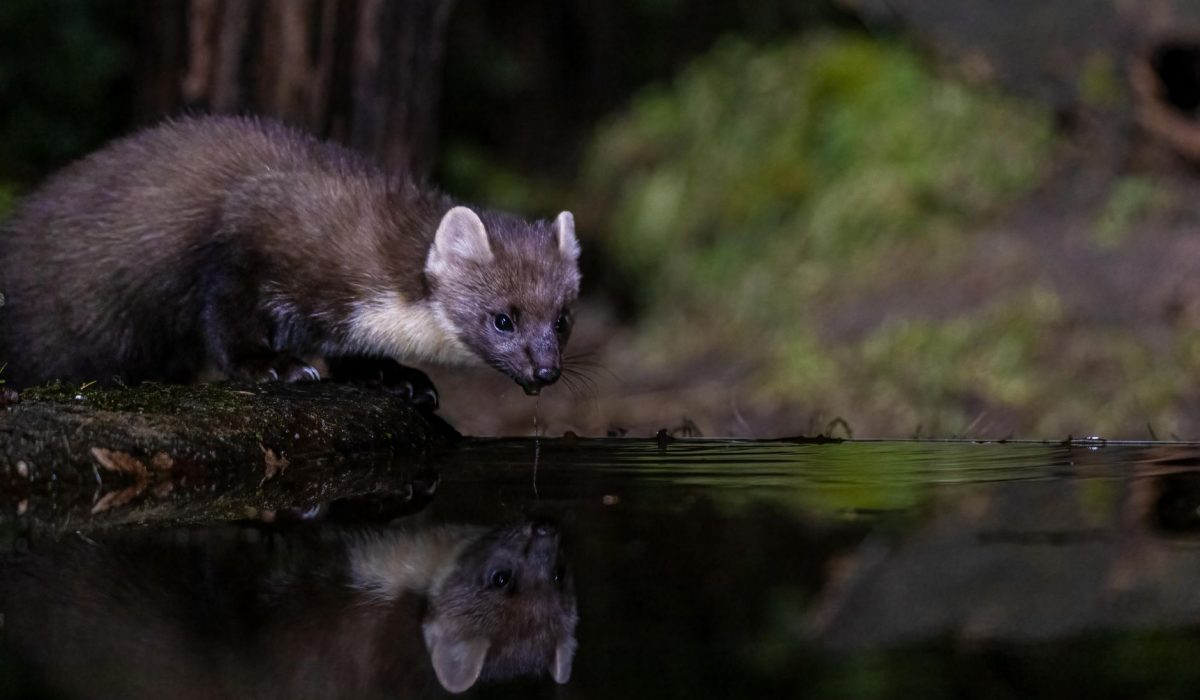
Pine martens at two forest sites have been recorded opening external storage lockers on campervans and motorhomes, including one latch type that requires a rotational movement rather than a pull.
The species is an exceptional climber with a dexterity closer to a small primate than to the mustelid most people picture. Opening a catch is well within its capabilities. What interests the researchers is the transmission.
Juveniles have been filmed watching an adult work a latch and then attempting the same latch within the same night, which indicates the behaviour is spreading socially rather than being independently discovered by each animal.
“There is one male we have watched for two seasons who takes about nine seconds on the turn-catch. The team call him Revolver, for obvious reasons, and I would ask you not to print that as though it is official.”
A researcher at one of the sites
Why it matters more than it sounds
Pine martens were persecuted almost to extinction in Britain and their recovery in Scotland is one of the genuine conservation successes of the last fifty years.
Food conditioning threatens that in the usual way. Animals that associate vehicles with food lose wariness, spend time in car parks and laybys, and are killed on roads. Road mortality is already the largest single recorded cause of death in the recovering population.
There is also a diet problem. Martens eat fruit, eggs, small mammals and insects. What they are getting from lockers is largely cereal, cheese and, in one recorded case, four hundred grams of fudge.
The findings
- Latch types opened: 3, including one requiring rotation
- Fastest recorded opening: 9 seconds
- Juveniles observed copying adults: yes, within the same session
- Leading recorded cause of death in the population: road traffic
- Effective deterrent: a padlock, or storing food inside the vehicle
The recommendation from both sites is the same and takes four seconds: put the food inside, not in the outside locker. The marten cannot open a door. It has been checked.