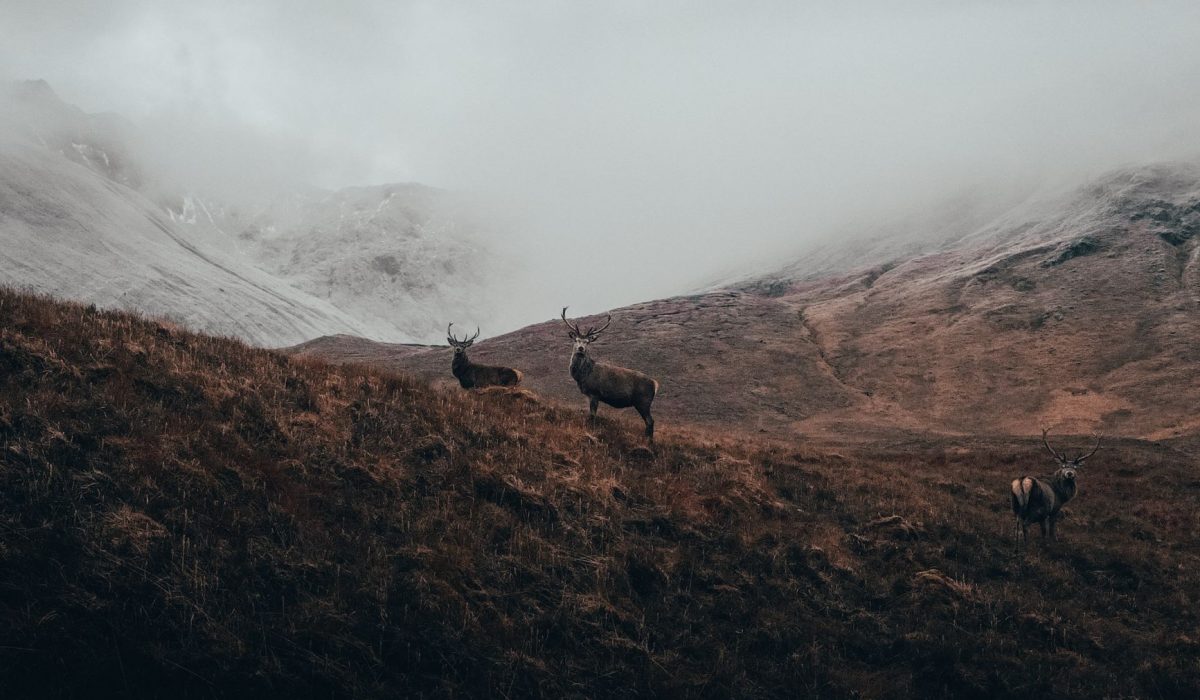
There is a word for it now, which is how you know it has become a market. The “coolcation” — a holiday chosen for the absence of heat rather than the presence of it — has moved in three summers from a Scandinavian curiosity to the fastest-growing category in the British booking data. And the north of Scotland, which has spent roughly four hundred years apologising for its weather, suddenly finds itself holding the only product anyone wants.
Search interest in Aberdeenshire, Moray, Caithness and Sutherland is up by a factor no tourism officer will say out loud in case it stops. Operators along the north coast report enquiries from Surrey, Kent and Essex arriving in volumes they associate with the week after a television series airs. One caravan park near Banff has taken more August bookings than in the previous three summers combined.
The appeal is not complicated. It was 41°C in parts of southern Spain last week. It was 12°C in Peterhead, with a stiff onshore wind and visibility of about forty metres. For a family that spent last August sitting in a darkened room in Hampshire waiting for the sun to go down, forty metres of visibility is not a drawback. It is the entire proposition.
‘They arrive expecting Cornwall’
What arrives, however, is not always what was pictured. The north east is a working coast, not a decorative one. Its towns were built for fish and then for oil, and both industries have been unkind lately. Union Street in Aberdeen, once the grandest shopping thoroughfare north of Princes Street, has a vacancy rate that the council has stopped putting in press releases. Granite is a magnificent building material in sunshine. In persistent drizzle it does something to the spirit that no marketing budget has yet solved.
“They arrive expecting Cornwall. They get a harbour, three closed cafés and a wind that takes the door off your hand. Some of them love it. Some of them are back in the car by two.”
Kenneth Baker, who runs boat trips out of a north east harbour town
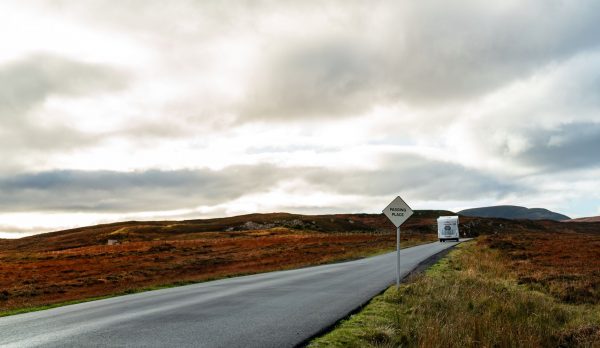
Distances surprise people too. The A96 and the A9 remain, in long stretches, single carriageway roads on which a caravan reduces everything behind it to a procession. Dualling has been promised, deferred, re-promised and deferred again for the better part of two decades. Fuel on the north coast is routinely the most expensive in the United Kingdom. In parts of Sutherland the nearest large supermarket is an hour and a half away, and the nearest NHS dentist taking new patients is a rumour.
The cheap end of the boom
Here the conversation among operators becomes noticeably more careful, and then, after a second cup of tea, considerably less careful.
The growth is not evenly distributed. Hotels report solid but unspectacular gains. The explosive numbers are in the free and near-free end of the market: roadside pull-ins, forestry car parks, laybys on the coast road, and the informal overnight spots that appear on apps faster than any authority can respond to them. These are visitors who spend little locally, because spending little locally is the point of the trip.
The consequences are now well documented. Community councils along the north coast have spent the summer reporting the same three things: waste bags left beside emptied bins, human waste in the dunes and forestry edges, and passing places used as parking spaces, which on a single track road is not an inconvenience but a genuine obstruction of the ambulance behind you.
“I have cleaned things out of that car park I will not describe to you over the telephone. We asked for a toilet block for eleven years. We got an interpretation board.”
Johnny Sasaki, campsite owner, north Sutherland
Litter collection costs across Highland and Aberdeenshire have risen sharply while the budgets funding them have not. Beach cleans that once ran twice a summer now run fortnightly. Volunteers, who are mostly retired and mostly the same people every time, are getting tired of it.
What a coolcation actually involves
- Temperature: average August high of 17°C on the north east coast; 12–13°C when the haar is in, which is often
- Rainfall: upwards of 200 wet days a year across much of the north west
- Midges: peak season runs June to early September, and they are undeterred by drizzle
- Roads: long single carriageway and single track sections on the A9, A96 and north coast route
- Facilities: public toilets in many coastal villages are seasonal, reduced, or closed permanently
- Winter, if you are tempted to return: sunset before 3.30pm in December
Who the north actually wants
Tourism bodies have started using a phrase that is doing an enormous amount of quiet work: “higher-value visitors”. Pressed on the meaning, one regional officer offered that the region was seeking guests who “stay longer, book accommodation, eat in restaurants and understand the countryside code”. Pressed on who that excludes, she looked at the ceiling for a while.
It is a genteel way of saying something less genteel, and everyone involved knows it. The north spent decades desperate for any visitor at all. Having got them in numbers, some of the welcome is now being quietly means-tested — a shift that sits uneasily in communities where a fair number of residents could not afford the holidays now being marketed as appropriate.
“We wanted tourism. This is tourism. You do not get to order the nice half of it.”
Mei Ling, tourism economist, quoted at a regional conference in Inverness
There are workable answers, and none of them are glamorous. Aire-style overnight parking with proper waste disposal, as used across France, costs a fraction of what cleaning up costs. Seasonal toilet provision funded by a visitor levy. Enforcement that exists in practice as well as on a sign. Every one of these has been recommended in a report, and most of the reports are still sitting somewhere pending a funding decision.
In the meantime the coolcation continues, because the alternative is 41°C. The north has the one thing the rest of Europe has run out of, which is weather you can walk about in. It is worth remembering, on the drive up, that people live behind those views all year — including in February, when the visibility is also forty metres and nobody is calling it a holiday.