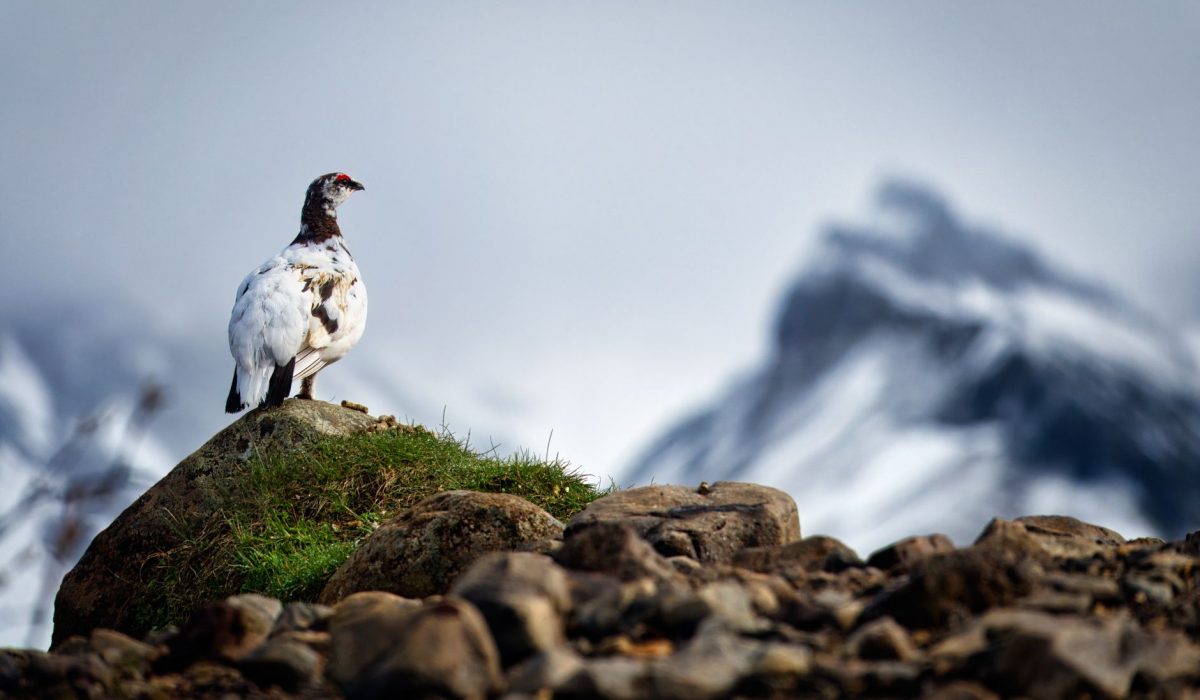
Ptarmigan on one Cairngorm plateau path now allow humans to approach within four metres before moving, compared with a flush distance of around thirty metres recorded in 2016.
The behaviour is routinely described by walkers as tameness, and photographs of ptarmigan standing calmly beside boots circulate every summer.
The interpretation among researchers is different, and it is not sentimental.
The energy argument
Ptarmigan live at the edge of what is survivable. They are an arctic species holding on in Britain at altitude, and their entire annual strategy is the careful management of a small energy surplus.
Flushing is expensive. A bird that flies 200 metres and settles has spent energy it must recover. On a path carrying 900 people a day, a bird with a 30-metre flush distance would spend most of the daylight period in the air and would not survive the season.
Reducing the flush distance is therefore not tameness. It is the only remaining option.
“People say the birds have got used to us. What has happened is the birds that could not afford to keep flying are the ones still here. That is not the same sentence.”
An upland bird ecologist
The cost that shows up elsewhere
Habituated birds sit tighter, which means they also sit tighter for the things they should be flying from. Predation by crows and gulls — both of which have increased on the plateau, following food waste — is up at the monitored sites.
Nests within two metres of the path edge have a markedly lower success rate, and the birds are choosing those sites because the vegetation there is different, having been trampled into a structure they read as suitable.
On the monitored path
- Flush distance, 2016: ~30m
- Flush distance, 2026: under 4m
- Peak daily footfall: around 900
- Nest success within 2m of the path: less than half the plateau average
- Crow and gull presence on the plateau: rising
The advice remains what it always was: stay on the path, take food waste down, and enjoy the fact that the bird did not fly off without concluding it is pleased to see you.