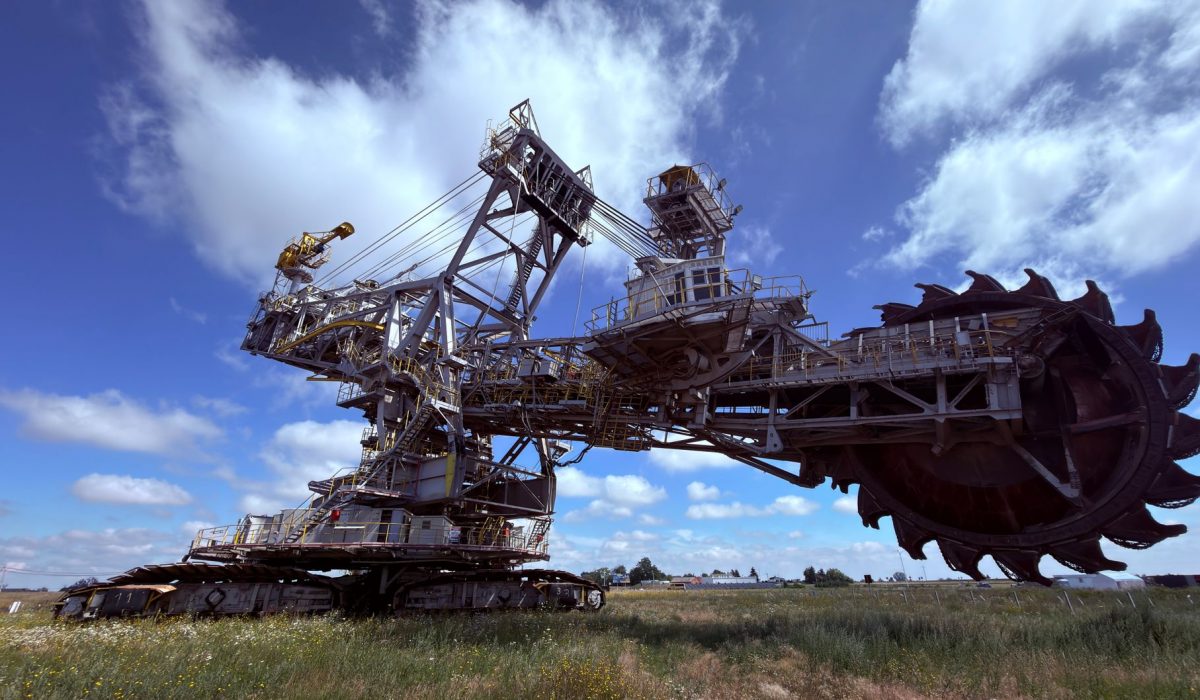
The Highland Superhighway, should it proceed, would be built largely by a single machine: a 40-metre self-propelled paving platform that walks on eight articulated legs.
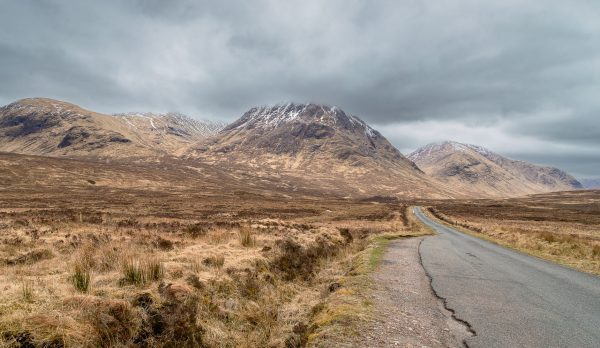
The legs are not a stylistic choice. Much of the route crosses deep peat, where the ground bearing capacity is low and tracked machinery either sinks or requires a temporary access road, which on peatland causes the sort of damage that takes centuries to undo. A legged platform distributes load through discrete footings, treads only where it places a foot, and leaves the surface between untouched.
This is a real technique. It is used at smaller scales on wind farm construction in exactly these conditions. What is unusual here is the size.
What it does
The platform straddles the full width of the carriageway, receives material from behind, and lays finished road ahead of itself at a rate of approximately 400 metres per day. It carries its own generation, a crew of eleven, and accommodation for them.
It does not stop. It walks and lays, continuously, for the duration of a shift pattern.
“People keep asking me what else it could do. Nothing. It lays road. It has always laid road. It will only ever lay road.”
Dr Huey Emmerich, whose firm designed the platform
The questions
There have been questions.
The most persistent concerns the legs themselves, and specifically whether a self-propelled 40-metre walking platform is a paving machine that happens to walk or a walking machine that happens to pave. The design team regard this distinction as unserious. Several submissions to the consultation regard it as the only serious question in the document.
The platform
- Height: 40m
- Legs: 8, articulated, independently levelling
- Laying rate: ~400m of finished carriageway per day
- Crew: 11, accommodated on board
- Ground pressure: lower than a walking adult, per footing
- Time to walk Perth to Inverness: 14 months, laying as it goes
The peat argument
Whatever one makes of the road, the machine’s case is the strongest part of the proposal. Scotland’s peatlands store a very large quantity of carbon, and the standard method of building across them — excavate, displace, drain — releases it. A platform that walks over the surface and lays behind itself is a genuinely better answer to a genuinely hard problem.
It is, an engineer on the review panel observed, an excellent solution. The difficulty is what it is a solution to.